Variable Displacement Piston Pump About
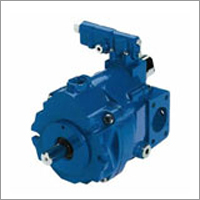
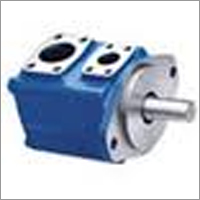
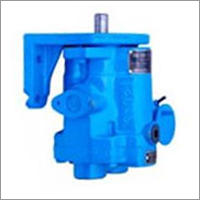
Established in the year 1990, we have become a well-known organization of assorted range of Variable Displacement Piston Pump. Offered pump is used in water treatment industry, petrochemical, paper, agricultural and various other industries for supplying fluids. This is manufactured by making use of high quality materials and advanced technology by our dexterous professionals. Our offered Variable Displacement Piston Pump is available in different specifications at reasonable price.
Features:
- High operational fluency
- Easy to operate at high pressure
- User-friendly interface
Engineered for Demanding Industrial PerformanceCombining high-strength materials with advanced axial piston theory, our pumps deliver high efficiency and reliability in industrial environments. The variable displacement technology allows precise flow adjustment, meeting diverse hydraulic system requirements. Their robust design ensures minimum maintenance and long life even under continuous high-pressure operation.
Flexible and Customizable to Your NeedsAvailable in various configurationswith flow rates from 10 to 120 L/min, head sizes up to 200 meters, and multiple shaft and seal optionsthese pumps can be tailored to suit specific requirements. Choose clockwise or counterclockwise rotation, integrated sensors, custom colors, and more for seamless integration into your setup.
Enhanced Features for Operational Safety and EfficiencyOur pumps provide automatic internal lubrication, forced air/oil cooling, and self-priming capability. The integrated protection grade (IP55) and low noise output support safe, efficient operation. Every unit undergoes stringent quality control to meet ISO 9001 standards, ensuring high-pressure output with minimal operating disruption.
FAQs of Variable Displacement Piston Pump:
Q: How does a variable displacement piston pump improve hydraulic system efficiency?
A: By adjusting its displacement in response to system demand, the variable displacement piston pump delivers only the required flow and pressure. This feature significantly reduces energy consumption and heat generation, resulting in increased efficiency and lower operating costs for industrial hydraulic systems.
Q: What are the available shaft types and how do I choose between splined and keyed?
A: The pump offers both splined and keyed shaft types. Splined shafts provide superior torque transmission and are ideal for heavy-duty continuous applications. Keyed shafts are often suitable for standard industrial connections. Your selection depends on the drive connection and torque requirements of your system.
Q: When is forced air or oil cooling recommended for these pumps?
A: Forced air or oil cooling is essential during high-pressure, continuous-duty, or elevated ambient temperature conditions. Proper cooling ensures stable performance, extends pump life, and supports operation at the upper end of the temperature range (-20C to +80C).
Q: Where are these variable displacement piston pumps best utilized?
A: These pumps are ideal for industrial hydraulic systems within construction, injection molding, and heavy machinery applications. Their robust design, high-pressure capabilities, and adaptability make them suitable for demanding environments requiring precise and reliable fluid power.
Q: What is the installation process for the pump, and are there any special considerations?
A: Pumps are designed for horizontal foot mounting and are compatible with G1 threaded inlets and outlets. Installation involves secure foundation mounting, connection to power (220V/380V), and proper system priming. Ensure proper alignment and use of specified seals (NBR/FKM) for optimal leak prevention and longevity.
Q: How does the integrated temperature sensor benefit pump operation?
A: An optional integrated temperature sensor allows continuous monitoring of operating temperature, alerting operators to potential overheating. This enhances safety, prevents damage, and contributes to longer service life by enabling proactive maintenance.
Q: What maintenance is required to achieve the stated life expectancy of over 20,000 hours?
A: With features like automatic internal lubrication and quality seals, routine maintenance is minimal. Regular inspection, timely cooling fluid replacement, and prompt response to sensor alerts will ensure optimal operation and help achieve the life expectancy of more than 20,000 hours.
 Send Inquiry



 Send Inquiry


 Send Inquiry